The Best Shrimp Fried Rice Recipe
Shrimp Fried Rice is one of those dishes that looks humble on the plate and then quietly steals the whole meal.
I have cooked this recipe more times than I can count.
Late nights.
Lazy Sundays.
Leftover rice sitting in the fridge, begging for purpose.
This is not restaurant fried rice.
This is better.
It is practical.
It is deeply satisfying.
It respects the ingredients instead of drowning them in sauce.
And it proves that Homemade Fried Rice can absolutely beat takeout when you know what you are doing.
This post is about technique.
Timing.
Heat.
And why shrimp fried rice rewards patience more than speed.
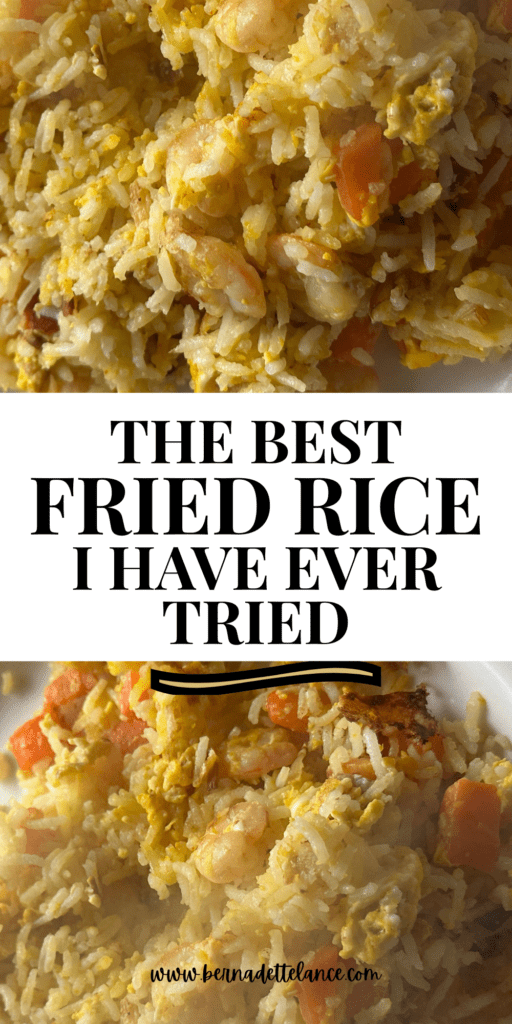
Shrimp Fried Rice
This dish sits comfortably among global classics like Arroz Chaufa, Riz Cantonais, and the Chinese Fried Rice Recipe tradition.
But it also adapts beautifully to a home kitchen.
No wok burner.
No mystery sauces.
Just clear steps and smart choices.
What follows is exactly how I make it, step by step. Nothing extra, nothing skipped!
Why I choose Cold Rice
The most important ingredient in Shrimp Fried Rice is not shrimp.
It is rice.
Specifically, cold rice.
Rice that has rested.
Rice that has dried slightly in the fridge.
Fresh rice is too soft.
It steams instead of frying.
Cold rice stays separate.
Each grain holds its shape.
This is why Leftover Rice Recipes dominate fried rice culture across Asia and Latin America.
In Peru, Arroz Chaufa depends on this exact principle.
In France-inspired kitchens, Riz Cantonais does the same.
If your rice is warm, stop.
Let it cool.
Or cook it earlier in the day.
This single step determines success.
Ingredients That Actually Matter
This recipe is intentionally simple.
That is the point.
Here is what goes into my version of the Best Fried Rice Recipe.
| Ingredient | Why It Matters |
|---|---|
| Cooked white rice | Cold, firm grains create real fried rice texture |
| Shrimp | Sweet, fast-cooking protein that stays tender |
| Carrot | Adds body and gentle sweetness |
| Onion or leek | Provides aroma without overpowering |
| Egg | Creates richness and binds everything |
| Olive oil | High heat without bitterness |
| Salt | Enhances, never dominates |
| Optional: saffron and black pepper | Adds color and flavor |
No soy sauce flood.
No sugar.
No bottled shortcuts.
This is how fried rice was meant to be.
Prepping the Vegetables First
Good fried rice starts before the pan is hot.
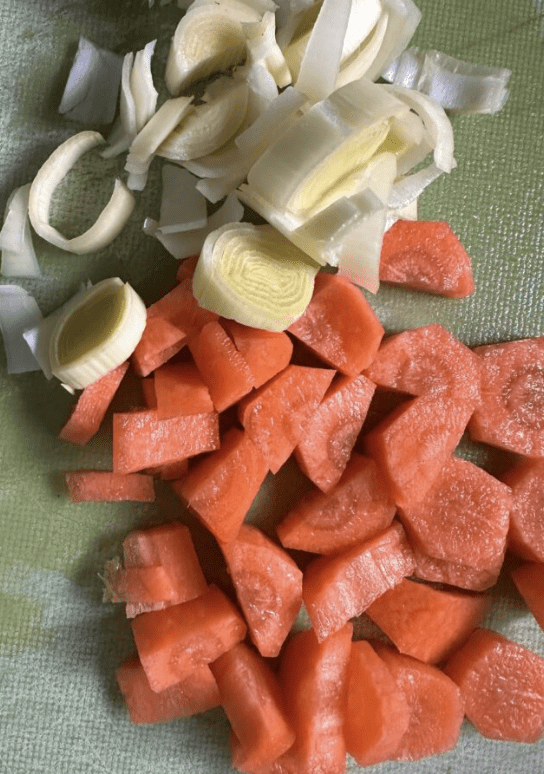
Carrots are chopped into small, even pieces.
Onion or leek is sliced thin.
Uniform size matters.
It ensures even cooking.
It prevents burning.
Vegetables should soften, not collapse.
This step is often rushed.
It should not be.
In Vegetable Fried Rice, this prep carries the entire dish.
Even in shrimp versions, vegetables build the foundation.
Shrimp Fried Rice Recipe Steps
Step 1: Cook and Chill the Rice
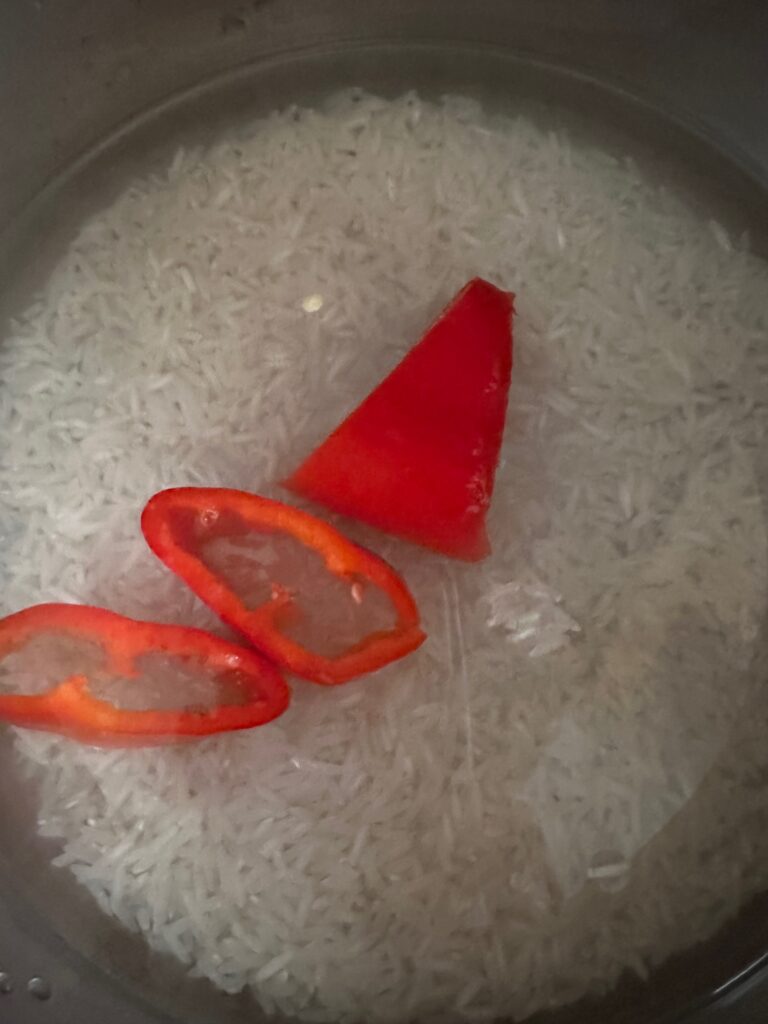
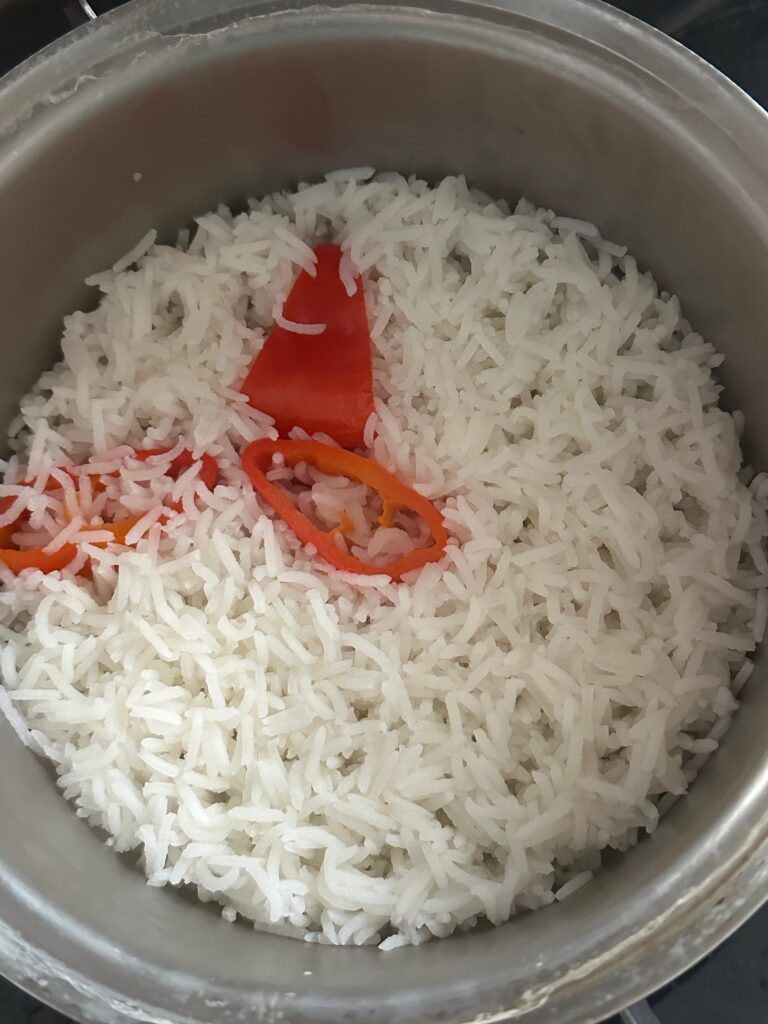
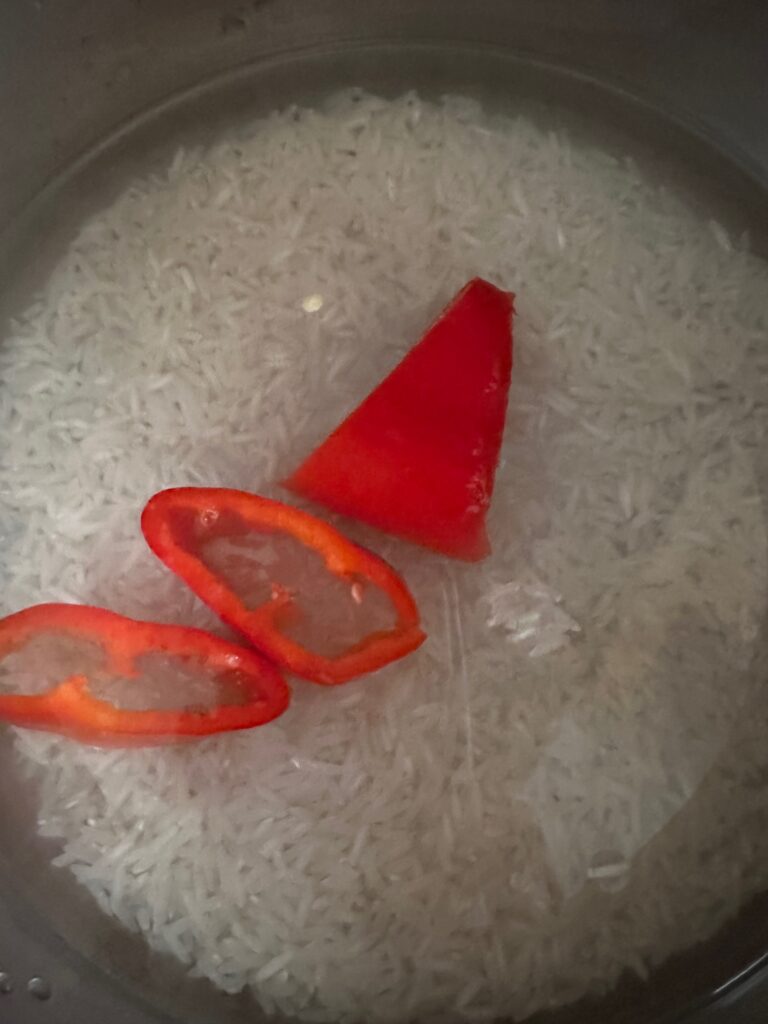
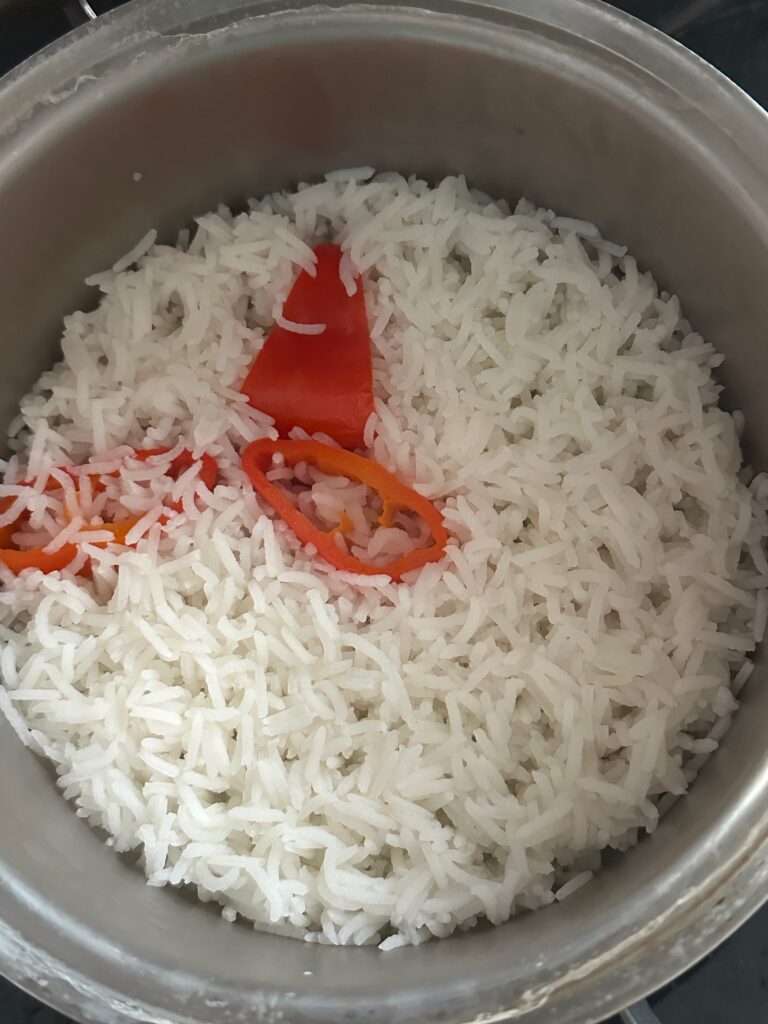
Cook white rice in advance. I personally add a piece of red pepper to my white rice. Totally optional. I just love it.
Use slightly less water than usual so the grains stay firm.
Once cooked, spread the rice out and let it cool completely.
Refrigerate for at least a few hours or overnight.
Cold rice is essential for proper Shrimp Fried Rice texture but you can also do it with room temperature one.
My personal favorite is jasmine rice.
Step 2: Prepare the Ingredients
Peel and devein the shrimp if needed.
If using frozen shrimp, thaw and pat dry.
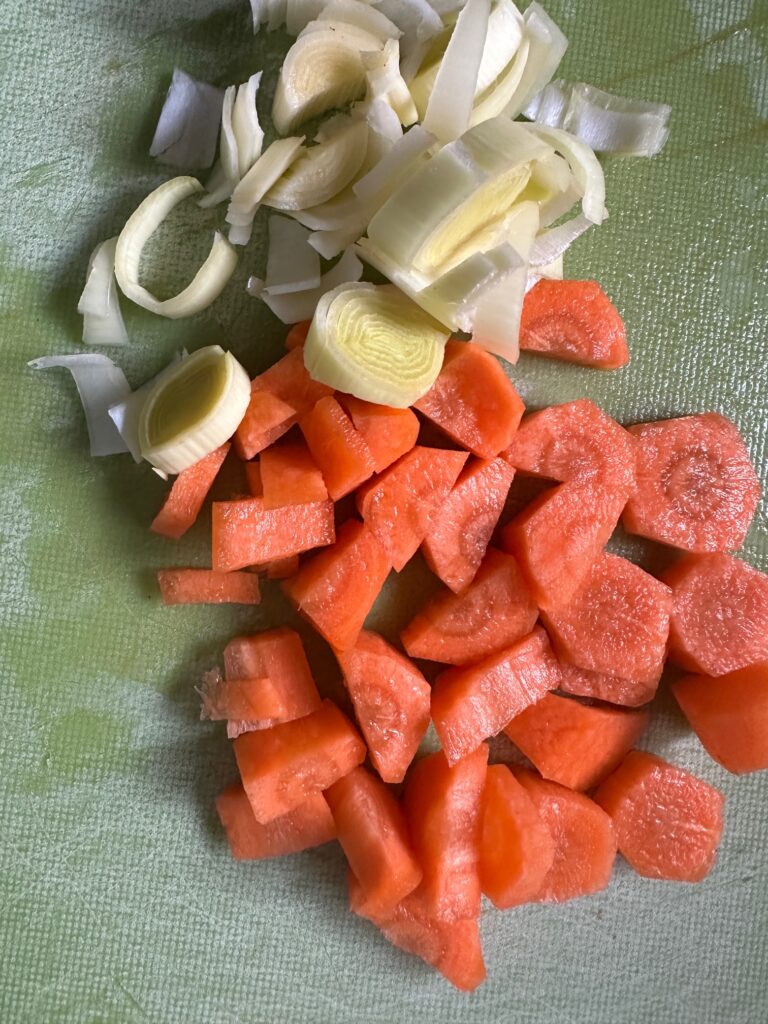
Chop the carrot into small, even pieces.
Slice the leek thinly, using mostly the white and light green parts.
Crack the eggs into a small bowl and set aside.
Keep everything close to the stove.
Timing matters.
Step 3: Heat the Pan
Place a large pan or wok over medium heat.
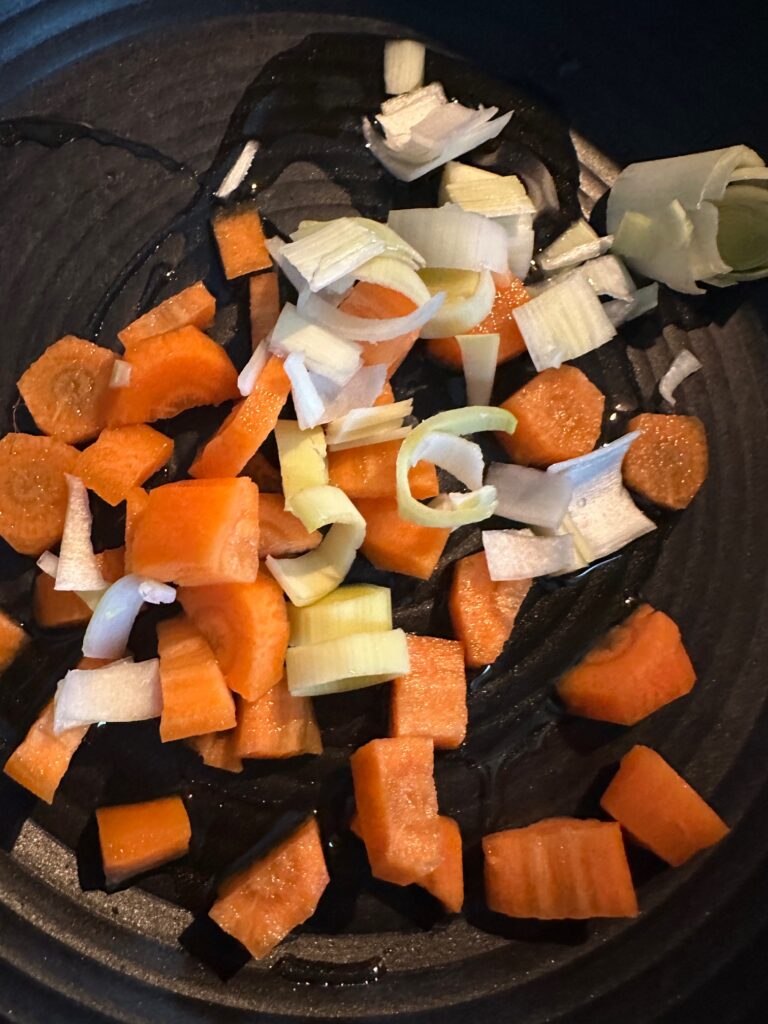
Add a olive oil and let it heat until shimmering.
The pan should be hot but not smoking.
This creates the base for proper frying, not steaming.
Step 4: Cook the Leek and Carrot
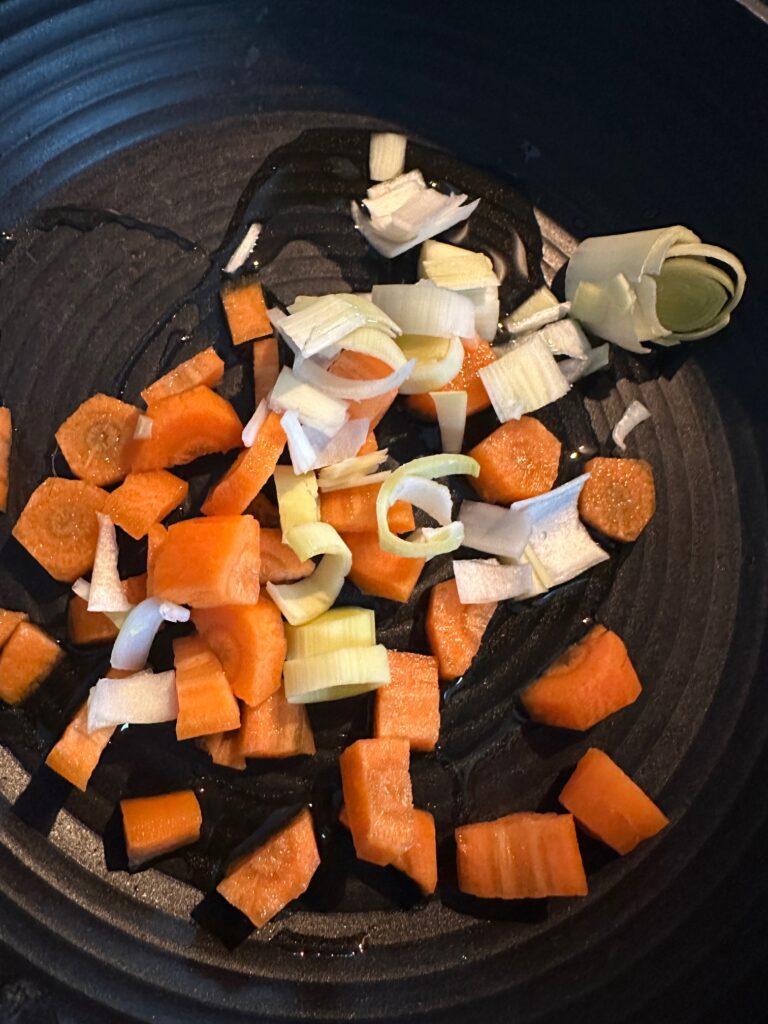
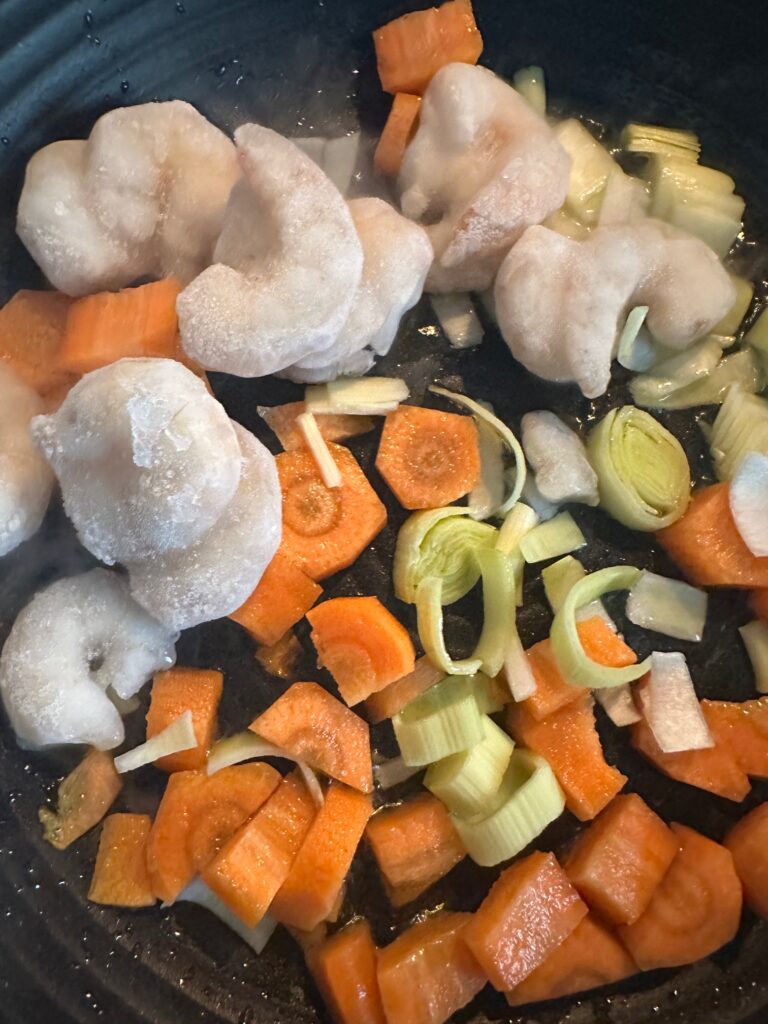
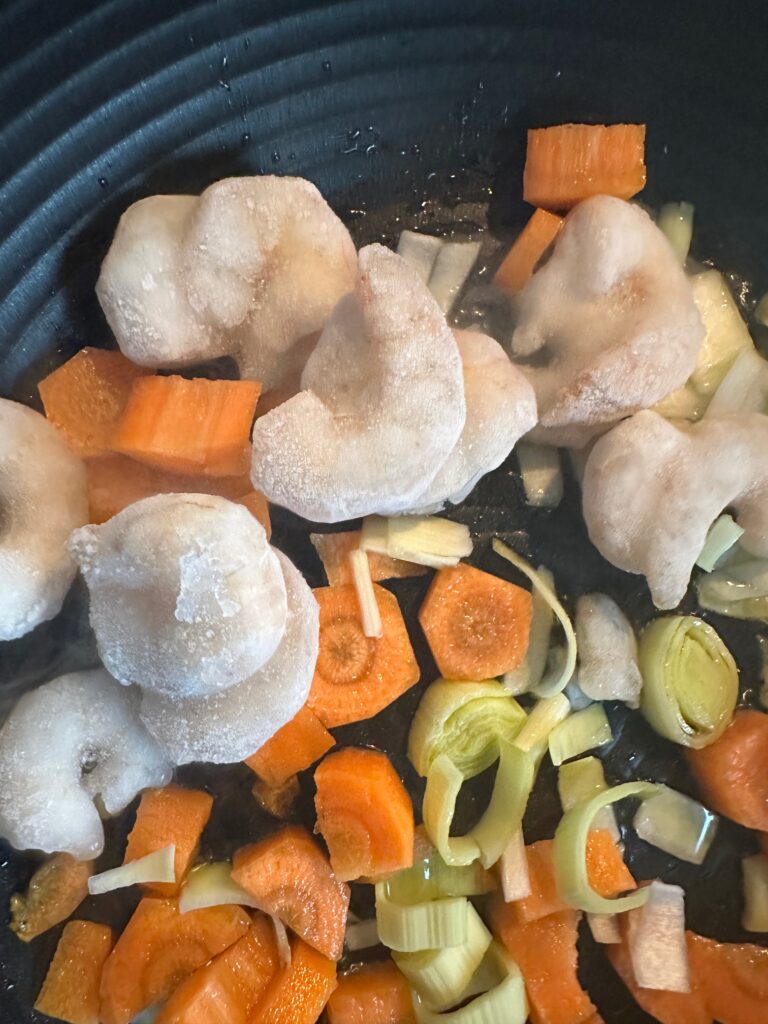
Add the chopped carrot and sliced leek to the pan.
Cook gently, stirring occasionally.
Let the vegetables soften and release aroma.
Do not rush this step.
This layer builds depth and balance.
Step 5: Add the Shrimp
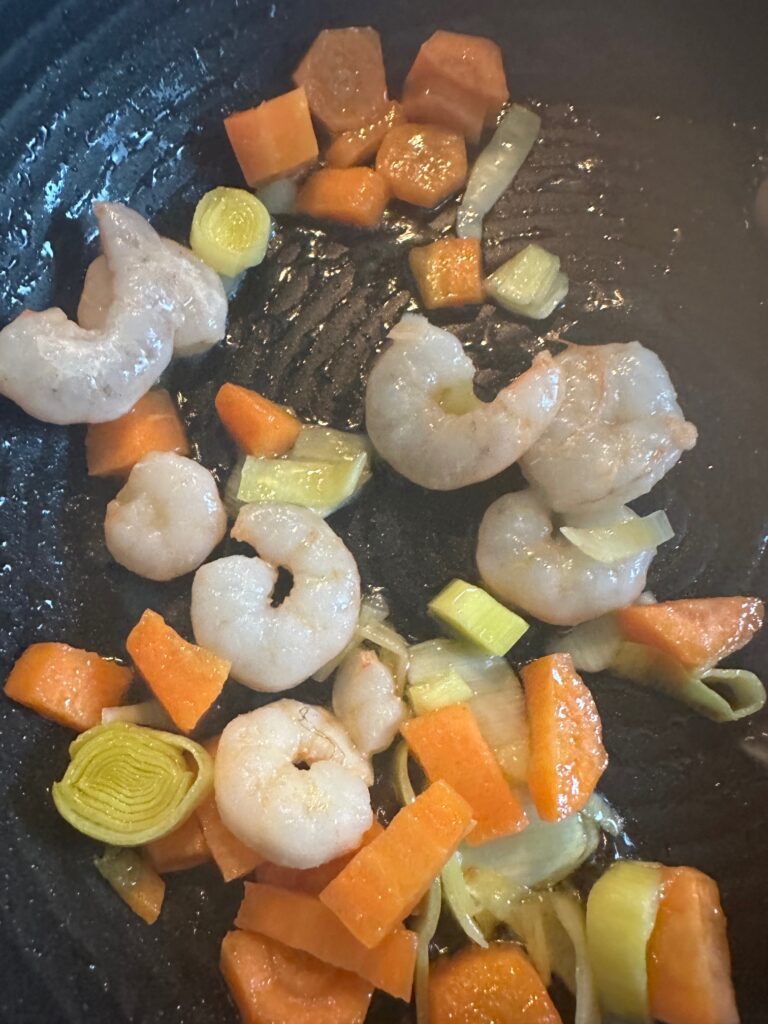
Add the shrimp directly to the pan with the vegetables.
Spread them out so they cook evenly.
Cook just until the shrimp turn pink and opaque.
Do not overcook.
Remove the pan from high heat if needed.
Shrimp finish cooking later.
Step 6: Cook the Eggs Separately in the Pan
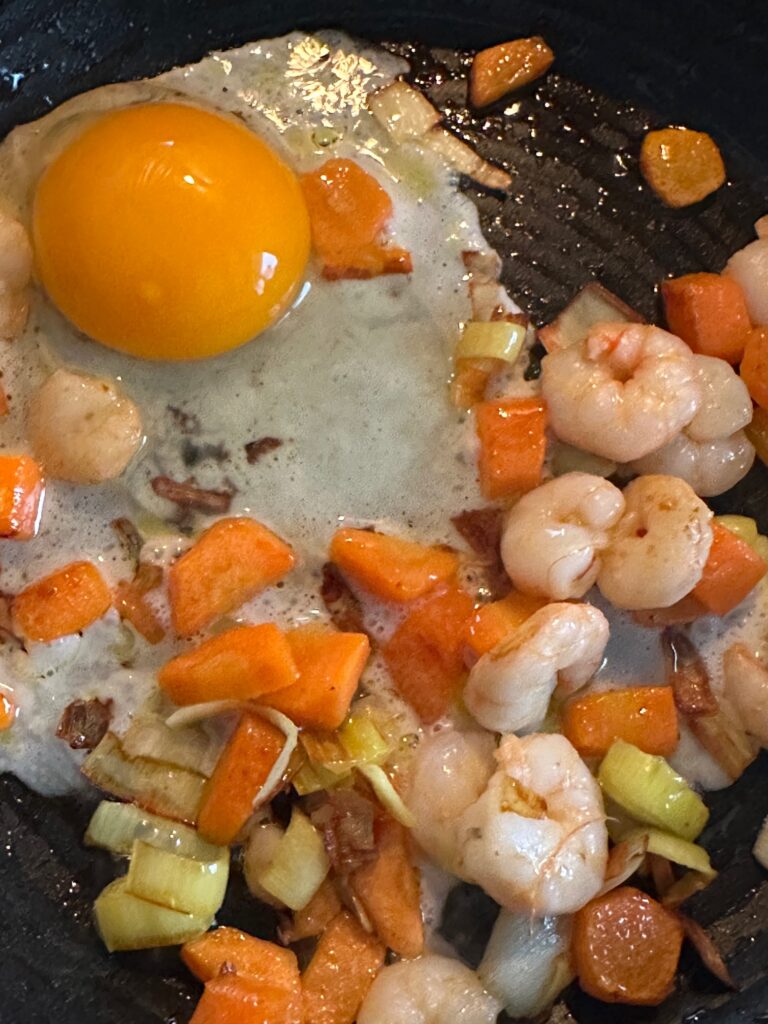
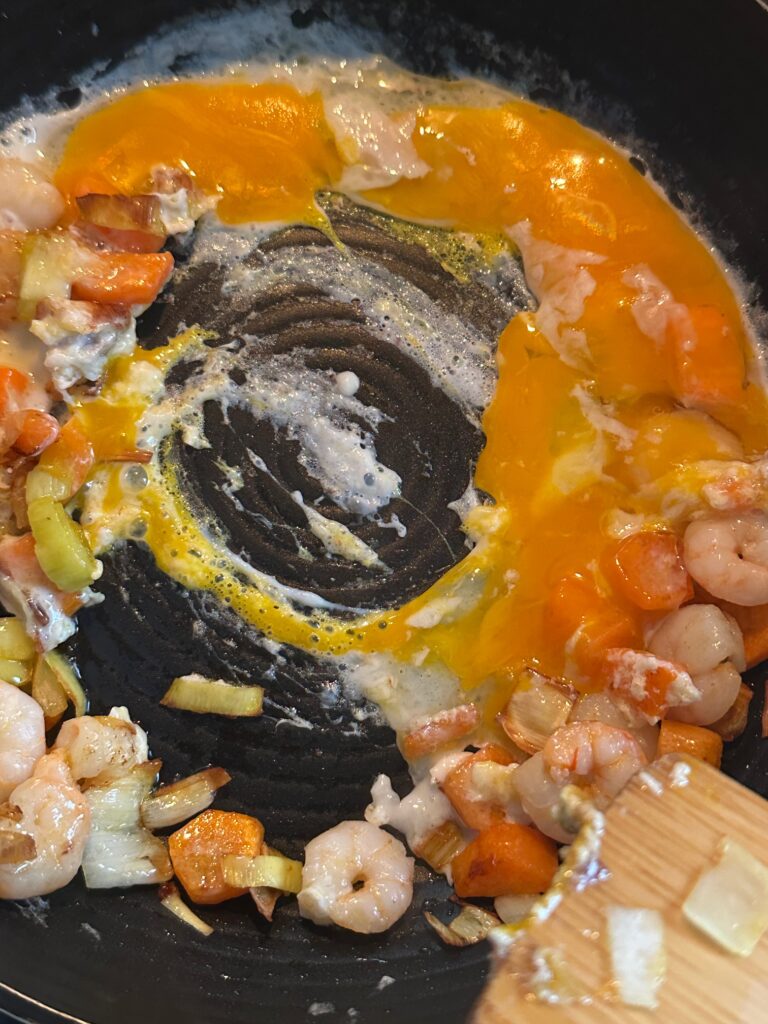
Push the shrimp and vegetables to one side of the pan.
Pour the beaten eggs into the empty space.
Let the eggs set slightly.
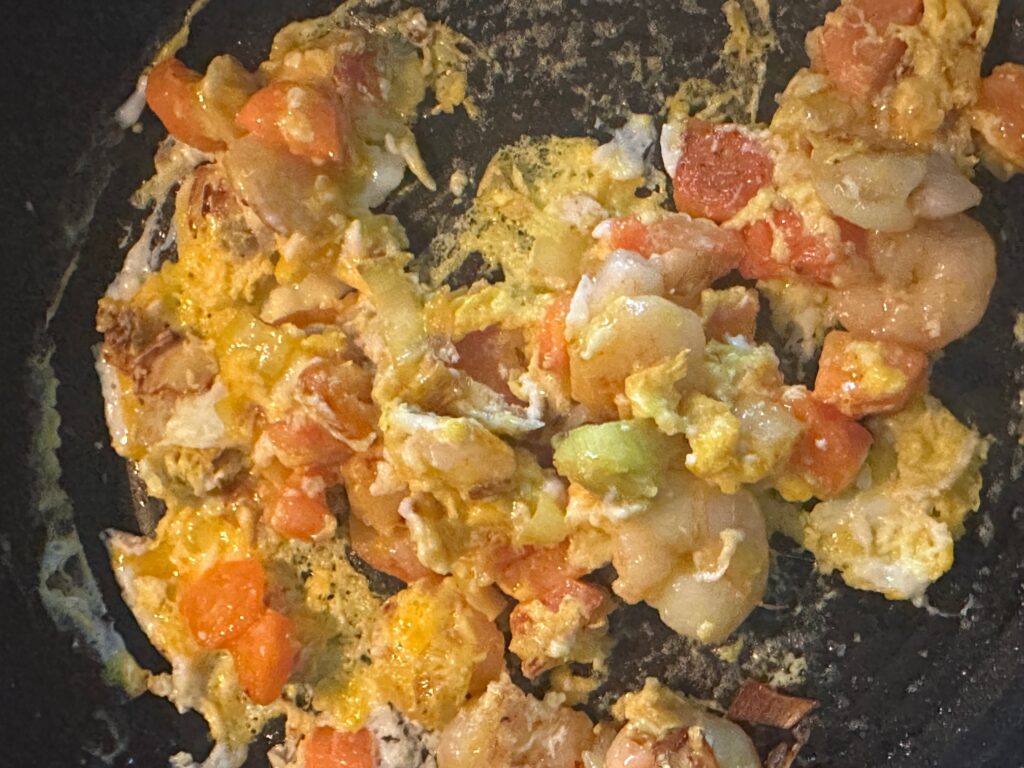
Gently scramble until soft but not dry.
Once set, fold the eggs into the shrimp and vegetables.
Step 7: Add the Cold Rice
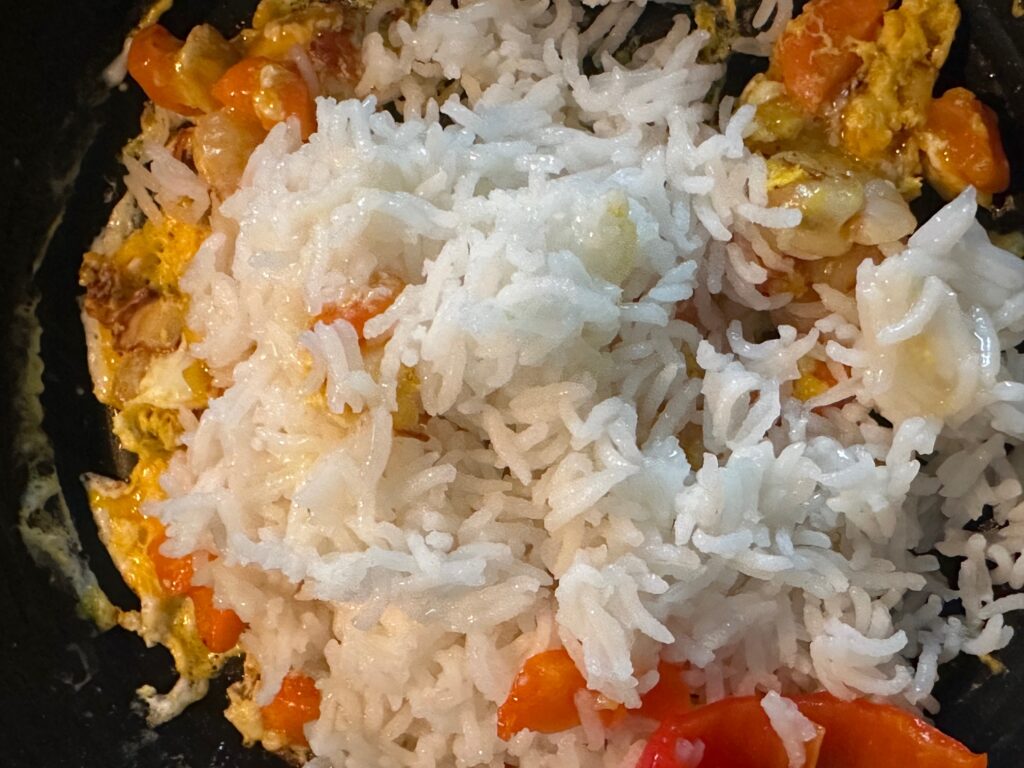
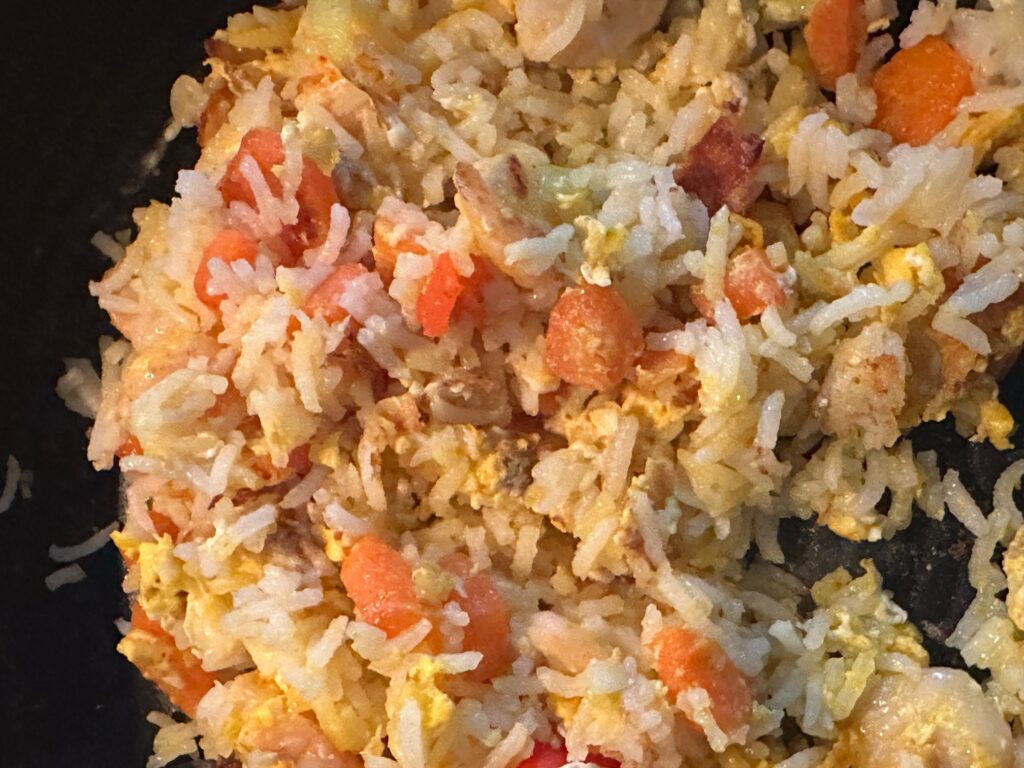
Add the cold rice to the pan.
Spread it gently over the surface.
Let it sit for a moment without stirring.
This helps the rice lightly toast.
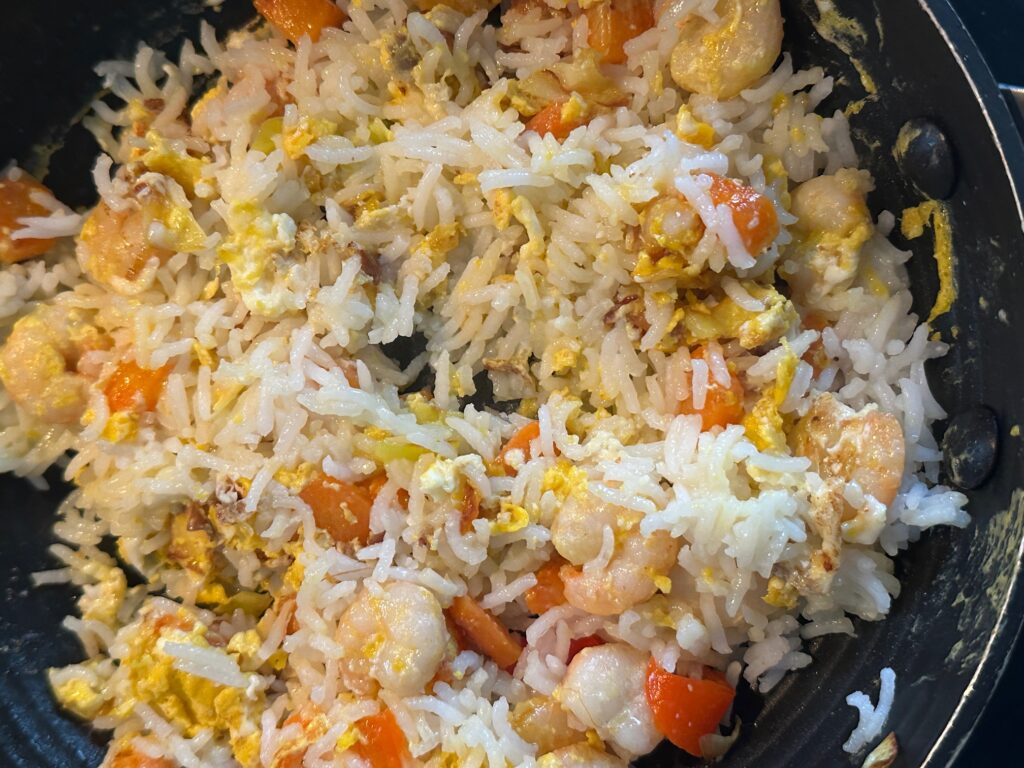
Then fold everything together carefully.
Avoid aggressive stirring.
Step 8: Season Simply
Season with salt to taste.
Taste before adding more.
If desired, add a very small amount of soy sauce.
The goal is balance, not overpowering flavor. I love to put a little of saffron and black pepper.
Step 9: Final Fry
Continue cooking for a few minutes, folding gently.
Make sure everything is evenly heated.
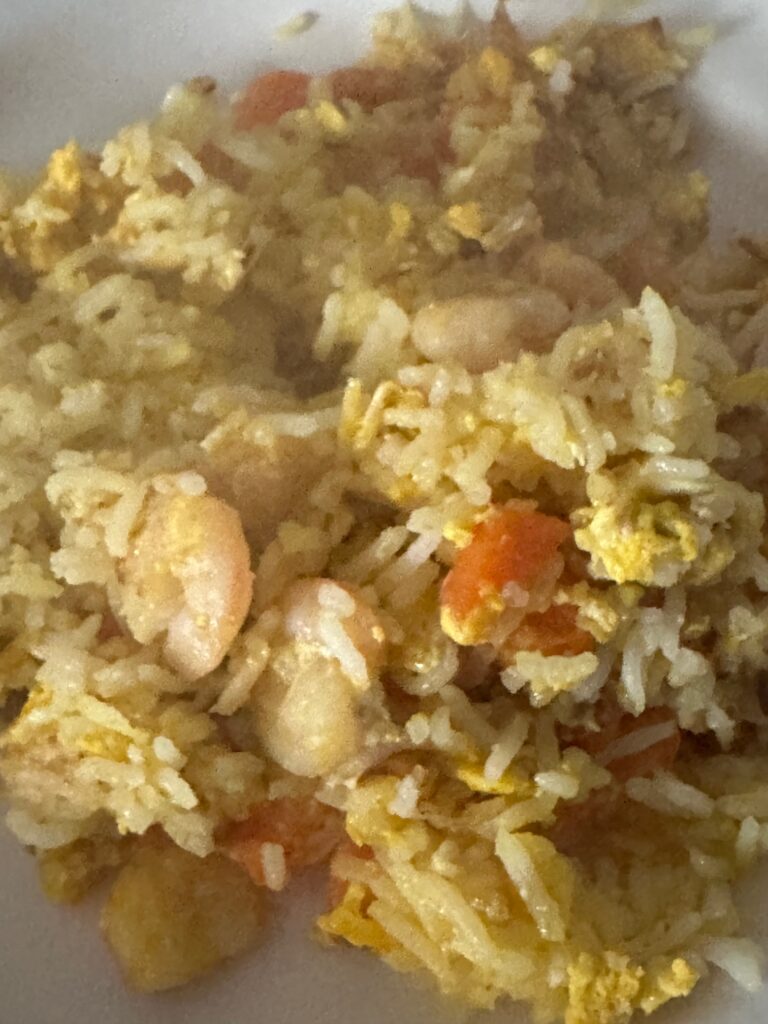
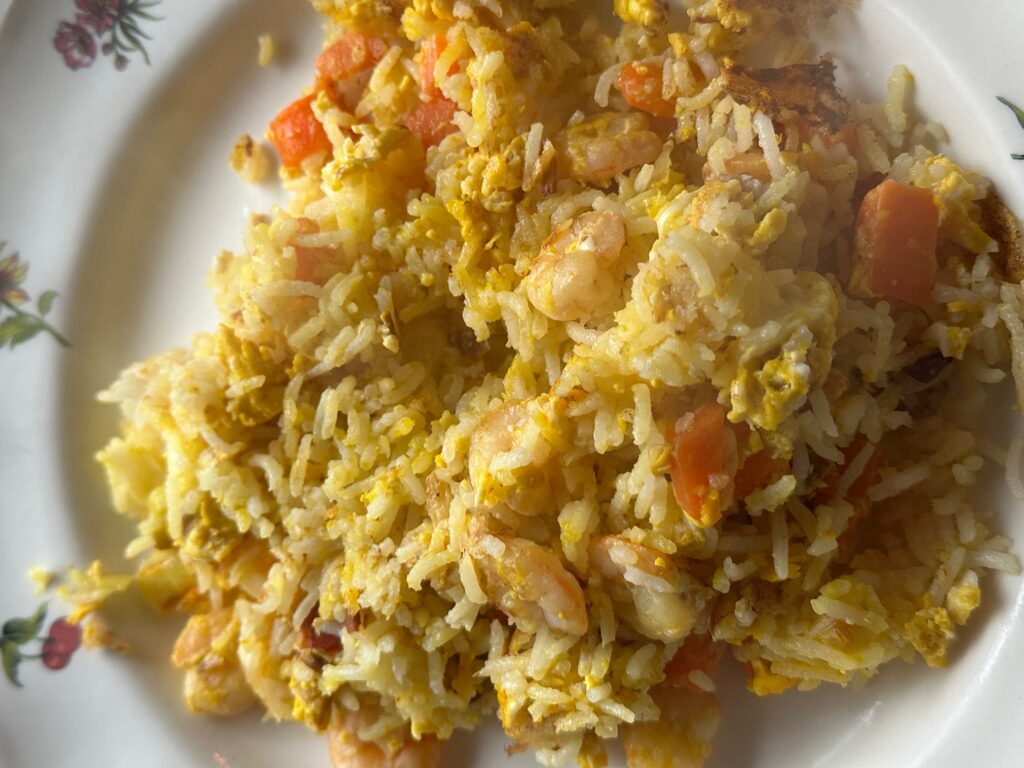
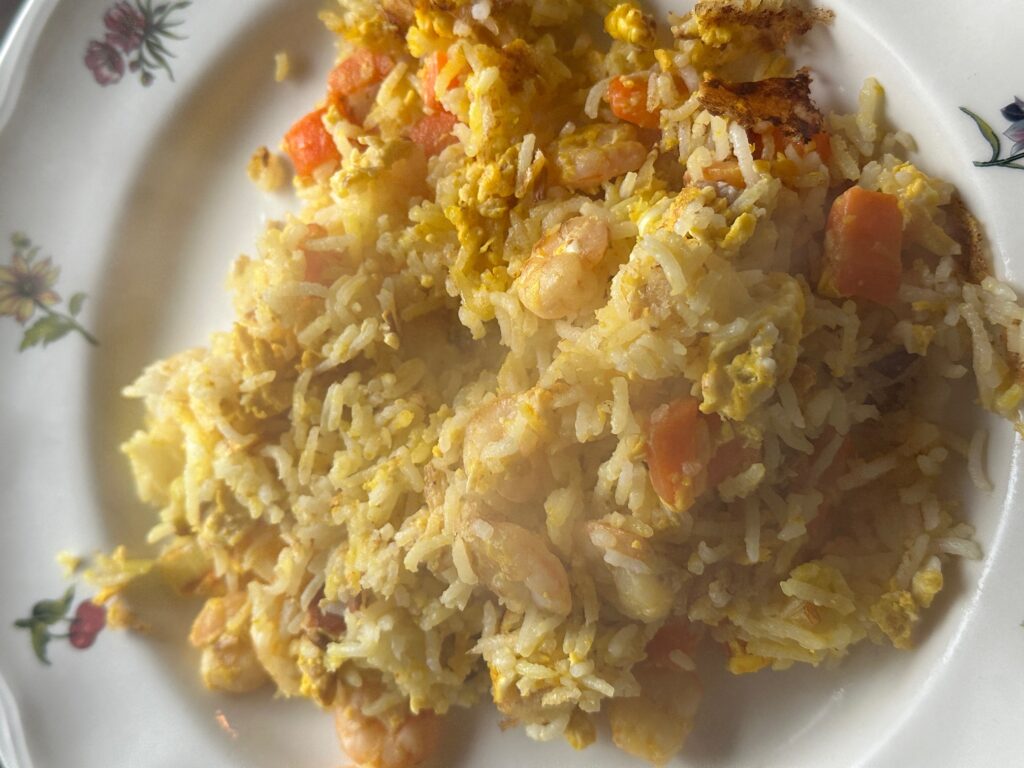
The rice should be fluffy, not mushy.
The shrimp should be tender.
The eggs should remain soft.
Step 10: Serve Immediately
Remove from heat.
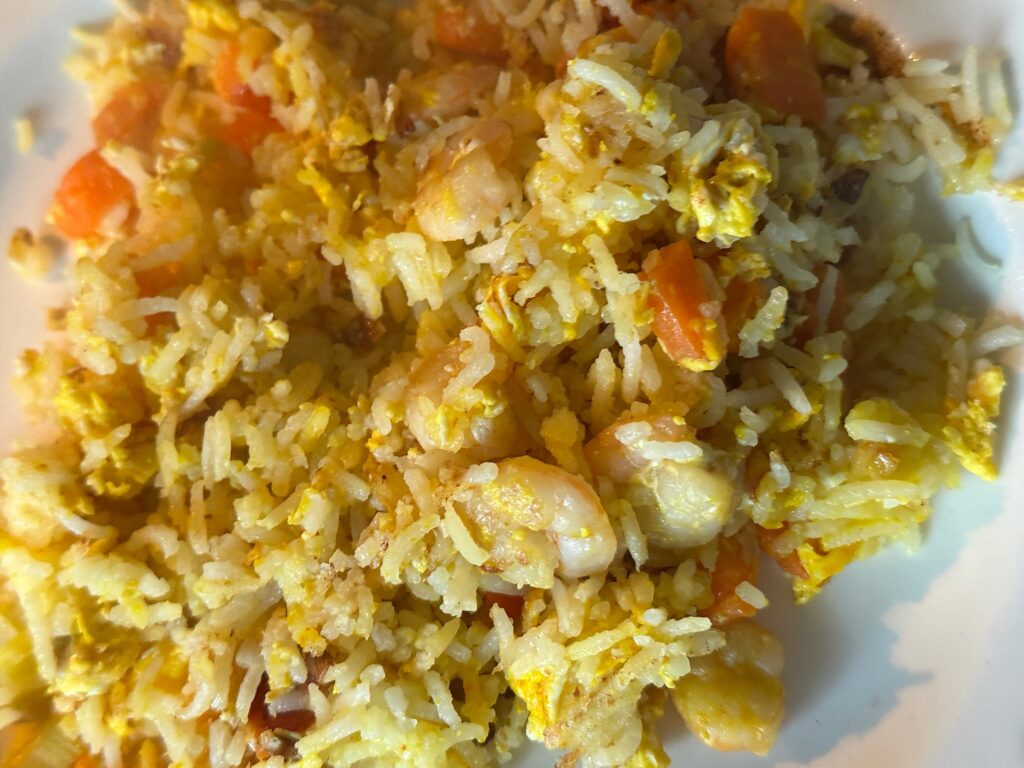
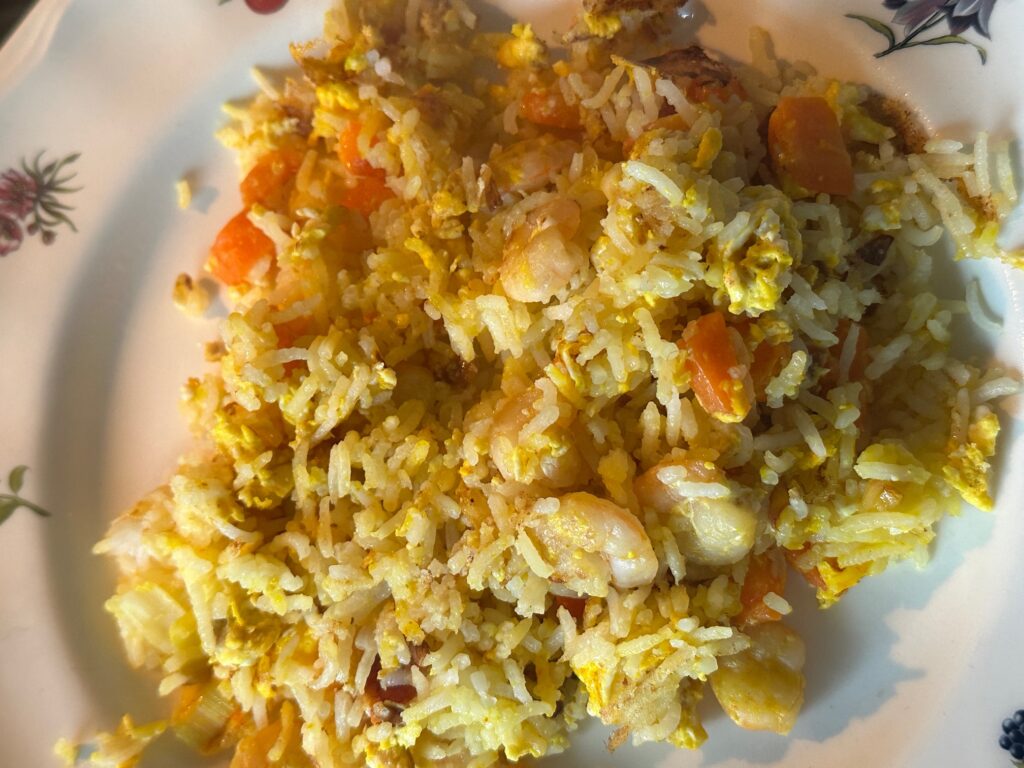
Serve hot as a complete Fried Rice Dinner.
Enjoy as is, or pair with a light side.
Why This Beats Takeout
Takeout fried rice is heavy.
Oily.
Overseasoned.
This version feels lighter.
More intentional.
You taste each ingredient.
Shrimp taste like shrimp.
Rice tastes like rice.
Egg tastes fresh.
This is why Homemade Fried Rice often surprises people.
It feels cleaner.
More balanced.
And honestly, more satisfying.
Comparisons With Other Fried Rice Styles
Let us talk context.
Chinese Fried Rice Recipe traditions emphasize wok hei and intense heat.
Schezwan Fried Rice leans spicy and bold.
Veg Fried Rice Recipe relies on vegetable variety and seasoning layers.
Arroz Chaufa blends Chinese technique with Peruvian flavors.
Riz Cantonais stays delicate and restrained.
This shrimp fried rice sits between worlds.
Simple.
Versatile.
Respectful of ingredients.
Common Mistakes to Avoid
Crowding the pan.
Using warm rice.
Overcooking shrimp.
Stirring too much.
Adding too much sauce.
Each mistake compounds quickly.
Avoiding them turns this into a reliable Fried Rice Dinner option.
How I Serve It
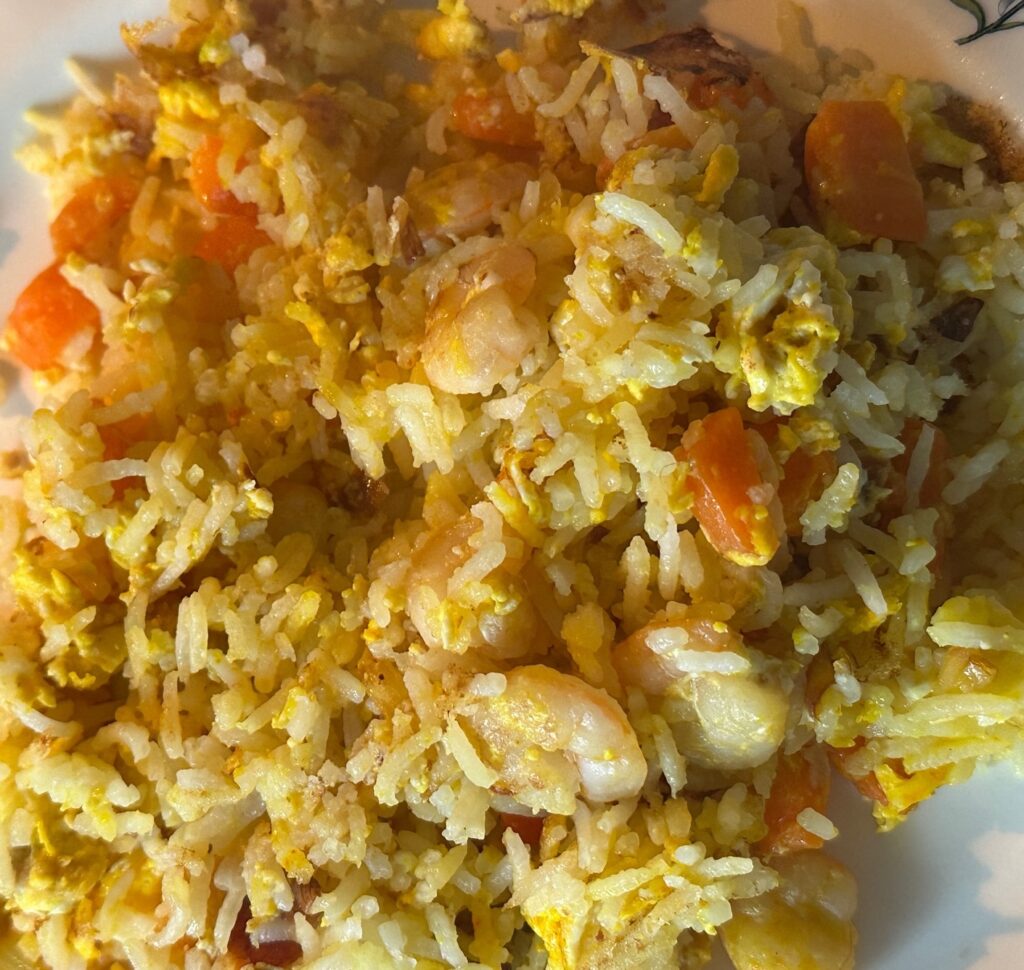
Sometimes alone.
Sometimes with a simple salad.
Occasionally with chili oil on the side.
Never buried under garnish.
Fried rice does not need decoration.
It needs balance.
Storage and Reheating Tips
This dish stores well.
Refrigerate in an airtight container.
Reheat in a pan, not a microwave.
Add a splash of water or oil.
Heat gently.
This preserves texture.
FAQ
Is this a Chinese Fried Rice Recipe?
It borrows technique but stays flexible.
Can I use brown rice?
Yes, but texture will be firmer.
Can I skip shrimp?
Absolutely. This becomes a Vegetable Fried Rice.
Is this similar to Arroz Chaufa?
Yes, in spirit and structure.
Can I add soy sauce?
Lightly. Always lightly.
Final Thoughts
Shrimp Fried Rice is not flashy.
It does not need to be.
It rewards attention.
It respects timing.
It transforms leftovers into something deliberate.
This is why it remains one of my most cooked meals.
It adapts.
It comforts.
It delivers.
Shrimp Fried Rice proves that simplicity, when handled with care, is incredibly effective.
This post showed you how to make the best shrimp fried rice ever, you may also like: