Seafood Soup Recipe That Changed the Way I Cook Forever
Seafood Soup Recipe.
I did not expect something this simple to taste this rich.
I was tired.
Hungry.
And honestly not in the mood to cook anything complicated.
But I had some frozen seafood.
Some rice.
An onion.
Half a red pepper.
That was it.
What happened next surprised me.
The pot slowly filled with aroma.
The broth turned cloudy and golden.
The seafood released its sweetness.
And suddenly this humble Seafood Soup Recipe became one of the most comforting meals I have ever made.
It reminded me why seafood soups exist in almost every coastal culture.
Spanish caldos.
New England chowders.
Asian seafood porridges.
Different names.
Same emotional effect.
Comfort.
Warmth.
Satisfaction.
This is now one of my favorite recipes.
Not because it is fancy.
Because it works.
And because it feels alive.

Seafood Soup Recipe: Why This One Is Different
Most seafood soups fall into two categories.
Too watery.
Or too heavy.
This one sits perfectly in the middle.
It has body.
But stays light.
The rice naturally thickens the broth.
Without cream.
Without flour.
That is the magic trick.
Unlike creamy chowder, this soup does not overwhelm the seafood.
Instead, it amplifies it.
Each spoonful tastes clean.
Salty.
Comforting.
It is incredibly effective.
And surprisingly affordable.
The Core Ingredients That Make This Seafood Soup Recipe Work
This recipe proves a powerful truth.
Flavor does not come from complexity.
It comes from sequence.
Here are the essential ingredients for two people, and why each matters:
| Ingredient | Amount | Notes |
|---|---|---|
| Olive oil | 2 tablespoons | Extra virgin preferred |
| Onion | 1 medium (150 g), diced | Yellow or white onion |
| Red bell pepper | 1 medium (120 g), chopped | Adds sweetness |
| Mixed seafood | 400 g (14 oz) | Shrimp, clams, mussels, scallops |
| Short grain rice | 80 g (½ cup) | Arborio or similar works well |
| Water or fish stock | 1.2 liters (5 cups) | Fish stock gives more flavor |
| Saffron threads | 8 to 12 threads | Crush lightly before adding |
| Turmeric powder | ¼ teaspoon | Adds warmth and color |
| Black pepper | ¼ teaspoon | Freshly ground preferred |
| Salt | ¾ to 1 teaspoon | Adjust to taste |
| Optional garlic | 2 cloves, minced | Recommended for deeper flavor |
| Optional parsley | 1 tablespoon chopped | Add at the end |
Each ingredient has a role.
Nothing is wasted.
Step One: Building the Foundation
Everything starts with oil.
This is not optional.
When the olive oil heats, it prepares the surface.
It allows flavors to dissolve and spread.
Then comes onion.
The moment onion hits oil, chemistry begins.
Sugars release.
Edges soften.
Sweetness develops.
This stage determines the entire soup.
If rushed, the soup tastes flat.
If done right, everything shines.

Step Two: Adding the Pepper Changes Everything
Red pepper adds brightness.
Not heat.
Brightness.
It balances seafood’s natural saltiness.
Without it, the soup feels heavier.
With it, the soup feels alive.
This is why coastal Mediterranean cooking often includes pepper.
It stabilizes flavor.



Step Three: Why Seafood Must Be Added Early
This surprises many people.
Most recipes add seafood late.
This one does not.
Adding seafood earlier releases flavor into the broth.
It creates a natural seafood stock.
This dramatically improves taste.
Shrimp shells.
Clam juices.
Mussel essence.
They transform plain water into something extraordinary.

The Seafood Combination That Works Best
You do not need expensive seafood.
Mixed frozen seafood works perfectly.
In fact, it can be better.
Because frozen seafood preserves freshness.
My favorite combination includes:
- Shrimp
- Mussels
- Clams
- Small scallops
Each contributes something unique.
Shrimp adds sweetness.
Clams add minerality.
Mussels add depth.
Scallops add softness.

Why Rice Is the Secret Weapon in This Seafood Soup Recipe
Rice transforms everything.
It thickens naturally.
Without artificial additives.
As rice cooks, it releases starch.
This creates a creamy texture.
But lighter than cream.
Healthier too.
Compared to flour-thickened soups, rice-based soups digest easier.
They feel cleaner.
This is why rice soups are common in Asia and southern Europe.
They are practical.
Efficient.
Delicious.



The Exact Cooking Timeline
Timing matters more than ingredients.
Here is the ideal sequence:
| Step | Action | Time |
|---|---|---|
| 1 | Heat oil | 1 minute |
| 2 | Cook onion | 3 minutes |
| 3 | Add pepper | 2 minutes |
| 4 | Add seafood | 3 minutes |
| 5 | Add water, salt and spices (saffron, black pepper, turmeric and salt) | Immediate |
| 6 | Bring to boil | 5 minutes |
| 7 | Add rice | Immediate |
| 8 | Simmer | 15 to 20 minutes |
What Happens Inside the Pot
Something fascinating happens during cooking.
The broth slowly turns opaque.
This is not a mistake.
This is flavor.
Seafood proteins release into liquid.
Rice starch binds them.
This creates body.
Professional chefs rely on this mechanism constantly.
It is natural emulsification.
How This Seafood Soup Recipe Compares to Other Soups
Let us compare honestly:
Compared to Clam Chowder
This is lighter.
Less heavy.
More refreshing.
Compared to Bouillabaisse
This is simpler.
Less expensive.
More practical daily.
Compared to Asian Seafood Congee
This is less thick.
More brothy.
More balanced.
Compared to Fish Soup
This is sweeter.
More layered.



The Moment You Know It Is Ready
After 20 minutes, with the lid on, the rice softens.
But does not dissolve completely.
The broth thickens slightly.
Seafood looks plump.
Not rubbery.
This is critical.
Overcooked seafood becomes tough.
Proper seafood remains tender.
My Personal Experience Making This Seafood Soup Recipe
The first time I made this, I expected something average.
I was wrong.
The smell filled the kitchen.
Warm.
Comforting.
The kind of smell that makes you feel safe.
The first spoon surprised me.
It tasted like something from a coastal restaurant.
Not from my kitchen.
I ate two bowls.
Not out of hunger.
Out of curiosity.
It felt nourishing.
Not heavy.
That difference matters.
Expert Tip: Why You Should Not Overseason
Seafood already contains salt.
Adding too much salt early ruins balance.
Always adjust at the end.
This gives control.
The Economic Advantage of This Seafood Soup Recipe
This recipe is cost efficient.
Compared to steak or salmon, mixed seafood costs less per serving.
Rice is inexpensive.
Onion and pepper are affordable.
Yet the result feels premium.
This is high value cooking.
Recap: Step by Step Instructions
Step 1: Heat the oil
Heat 2 tablespoons olive oil in a large pot over medium heat.
The oil should feel warm but not smoking.
Step 2: Cook onion and pepper
Add diced onion.
Cook 3 to 4 minutes.
Stir occasionally.
Add red pepper.
Cook another 2 minutes.
The vegetables should soften but not brown heavily.

Step 3: Add garlic and spices
Add minced garlic if using.
Add:
Saffron threads
Turmeric
Black pepper
Stir for 30 seconds.
This releases the spice aroma into the oil.
Step 4: Add seafood
Add mixed seafood directly into the pot.
Cook 2 to 3 minutes.
This releases natural seafood flavor into the base.
Step 5: Add liquid
Pour in 1.2 liters water or fish stock.
Add salt.
Bring to a gentle boil.
Step 6: Add rice
Add ½ cup rice.
Stir once.
Reduce heat to medium low.
Simmer gently.
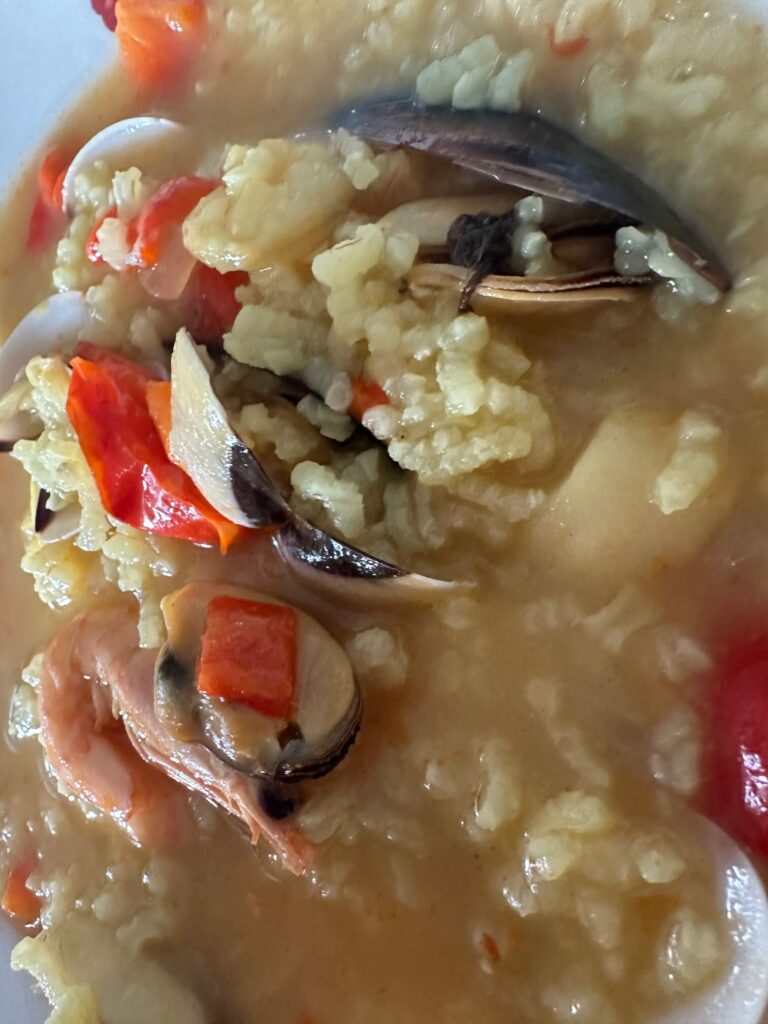
Step 7: Cook until ready
Cook 15 to 18 minutes.
Rice should be tender.
Broth should look slightly thickened and golden.
Step 8: Final adjustment
Taste.
Add more salt if needed.
Add parsley if using.
Rest 5 minutes before serving.
This improves texture.
Nutrition Benefits
Seafood provides essential nutrients:
- Protein
- Omega 3 fatty acids
- Zinc
- Selenium
Rice provides energy.
Vegetables provide vitamins.
Together, this creates a balanced meal.
Storage and Reheating Tips
This soup stores extremely well.
Up to 3 days refrigerated.
Flavor improves overnight.
Rice absorbs more flavor.
Reheat gently.
Never boil aggressively again.
Common Mistakes to Avoid
These mistakes reduce quality:
Adding rice too early
It becomes mushy
Cooking seafood too long
It becomes rubbery
Adding too much water
Flavor becomes weak
Skipping onion
Soup lacks depth
How to Upgrade This Seafood Soup Recipe
Optional upgrades include:
Garlic
Adds depth
Fish stock instead of water
Improves richness
Saffron
Adds luxury
Parsley
Adds freshness
When This Seafood Soup Recipe Is Most Perfect
Cold nights
When sick
When tired
When stressed
When needing comfort
It works every time.
Seafood Soup Recipe FAQ
Can I use frozen seafood?
Yes.
Frozen seafood works perfectly.
Often better than fresh supermarket seafood.
Can I use fish instead?
Yes.
Firm fish like cod works well.
Can I freeze the soup?
Yes.
But rice texture changes slightly.
How long does it last in the fridge?
Up to 3 days.
Is this healthy?
Yes.
High protein.
Low fat.
Balanced nutrients.
Final Thoughts on This Seafood Soup Recipe
Seafood Soup Recipe is more than a meal.
It is a system.
A sequence.
A reliable formula.
It transforms simple ingredients into something deeply satisfying.
It proves that cooking does not require complexity.
Only understanding.
Only patience.
Only sequence.
This post showed you how to make a deeply satisfying Seafood Soup Recipe, you may also like: